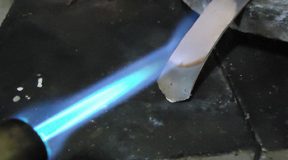
Tempering is done to develop the required combination of hardness, strength and toughness or to relieve the brittleness of fully hardened steels. Steels are never used in the as quenched condition. The combination of quenching and tempering is important to make tough parts.
This treatment follows a quenching or air cooling operation. Tempering is generally considered effective in relieving stresses induced by quenching in addition to lowering hardness to within a specified range, or meeting certain mechanical property requirements.
Tempering is the process of reheating the steel at a relatively low temperature leading to precipitation and spheroidization of the carbides present in the microstructure. The tempering temperature and times are generally controlled to produce the final properties required of the steel. The result is a component with the appropriate combination of hardness, strength and toughness for the intended application. Tempering is also effective in relieving the stresses induced by quenching.